In this article: When filing a complaint makes sense | What you can complain about | Documents you'll need | Step-by-step filing process | What happens after you file | Possible outcomes | Timeline expectations | Alternatives to a formal complaint | 10 FAQ
Rajasthan RERA Complaint Process: How to File and What Happens Next
Most buyers never need to file a RERA complaint — but knowing the process exists, and roughly how it works, changes how you approach a dispute with a builder in the first place. This guide walks through when filing actually makes sense, exactly what to prepare, and what happens once you submit a complaint to the Rajasthan RERA authority.
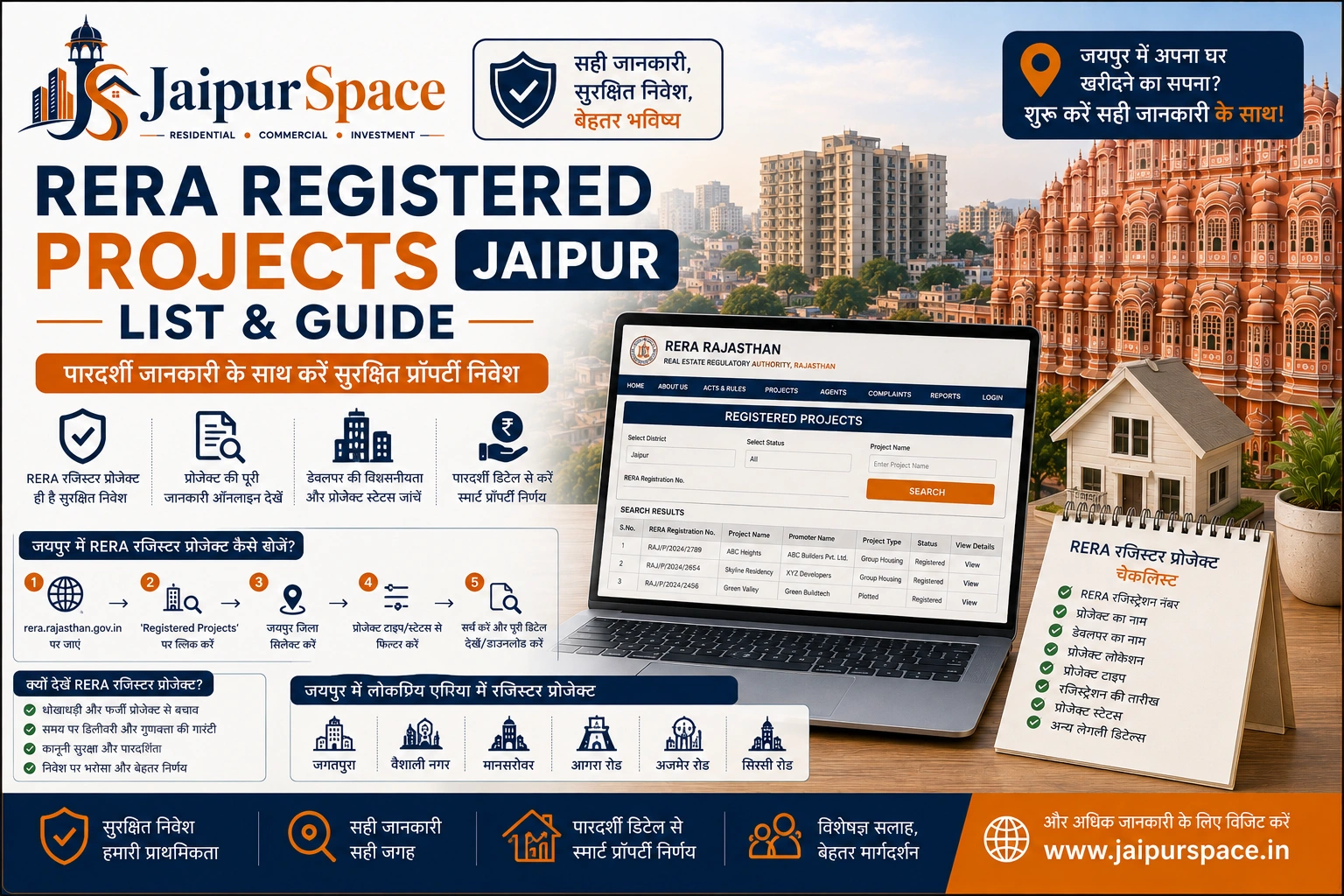
For the basics of verifying a project before you buy — which is the best way to avoid ever needing this process — see our RAJ RERA search and verification guide.
When Filing a Complaint Actually Makes Sense
| Situation | Complaint-Worthy? |
|---|---|
| Builder missed the RERA-registered completion date | Yes — a core RERA protection ✅ |
| Delivered carpet area differs meaningfully from what was sold | Yes ✅ |
| Project was marketed/sold before RERA registration | Yes — a direct violation ✅ |
| Structural defect within the 5-year liability period, unaddressed | Yes ✅ |
| Minor cosmetic disagreement not covered by the agreement | Usually better resolved directly, not through formal complaint |
| General dissatisfaction without a specific registered commitment breached | Weak complaint basis — needs a concrete, documented violation |
Documents You'll Need Before Filing
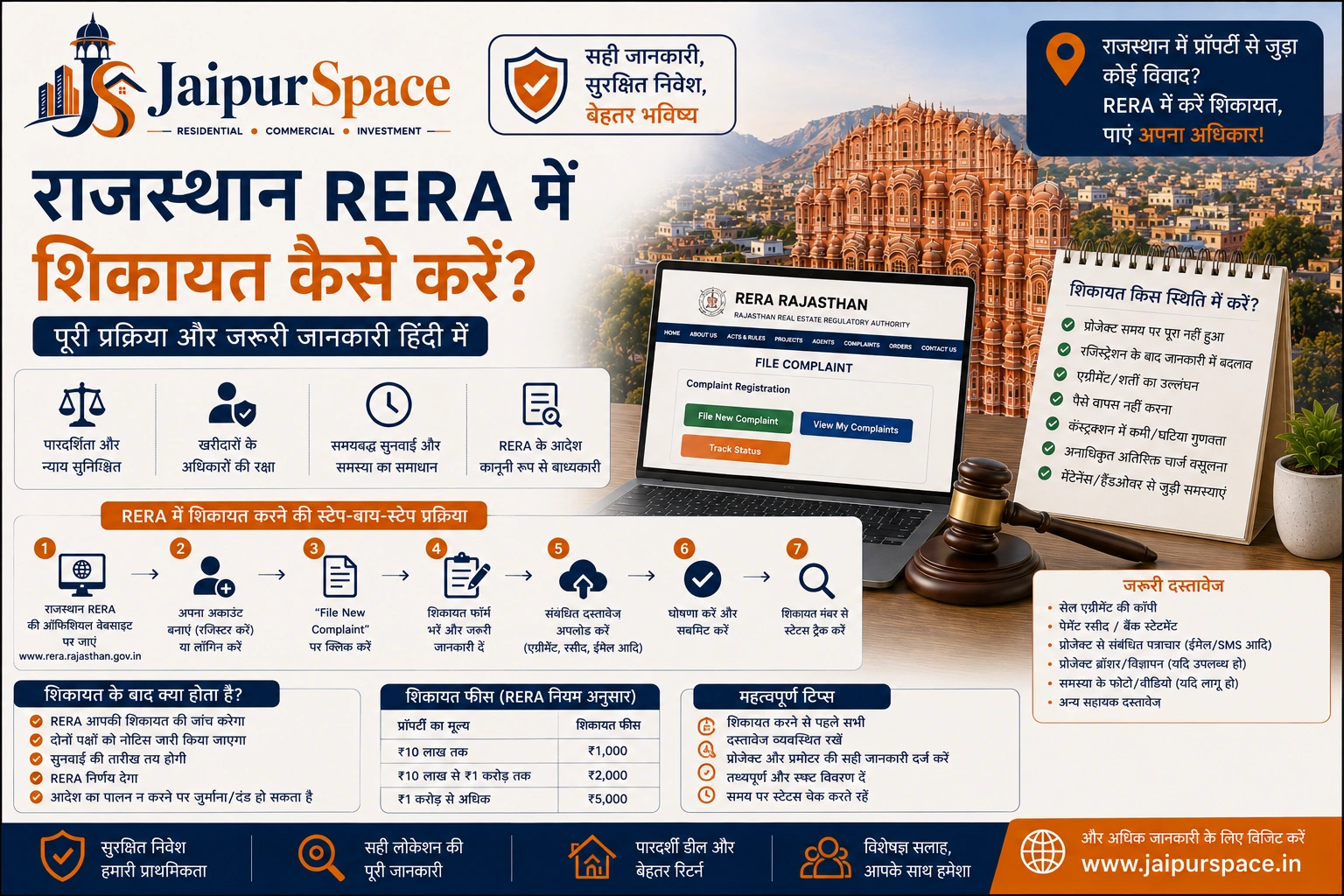
- Booking/sale agreement — the core contract establishing what was promised.
- Payment receipts — proof of what you've actually paid and when.
- The project's RERA registration details — pulled directly from the portal, showing the registered completion date and other committed terms.
- Written correspondence with the builder — emails, letters, or any documented attempt to resolve the issue directly.
- Evidence of the specific breach — photos, inspection reports, or other documentation supporting your claim.
Step-by-Step Filing Process
- Confirm your complaint falls under RERA's jurisdiction — it should relate to a specific registered commitment, not a general grievance.
- Gather all supporting documentation — organized and complete, before you begin.
- Complete the formal complaint form — available through the RAJ RERA authority, clearly describing the issue and the specific relief you're seeking (compensation, refund, or corrective action).
- Submit along with any applicable fee — fee structures can vary by complaint type and value involved.
- Retain your submission confirmation — this becomes your reference for tracking the case going forward.
What Happens After You File
| Stage | What Occurs |
|---|---|
| Notice to the promoter | The builder is formally notified of the complaint and given an opportunity to respond |
| Response period | The promoter submits their side, potentially with their own supporting documentation |
| Hearing | Both parties present their case before the RERA authority, in person or through representatives |
| Order | The authority can direct compensation, a refund with interest, or specific corrective action ✅ |
| Appeal (if needed) | Either party can appeal an unfavorable order to the state's Real Estate Appellate Tribunal |
Possible Outcomes
- Compensation: a monetary award for losses directly tied to the builder's breach.
- Refund with interest: particularly relevant for possession delays, where you can seek your payments back with interest for the delay period.
- Directed corrective action: an order requiring the builder to fix a specific issue (e.g., a structural defect within the warranty period).
- Complaint dismissed: if the authority finds insufficient basis — this is exactly why solid documentation matters from the outset.
Realistic Timeline Expectations
RERA processes are generally faster than traditional civil litigation, since they're specifically designed as a streamlined alternative — but "faster than court" still doesn't mean instant. Expect the process from filing to a final order to take real time, genuinely varying by case complexity, the authority's current caseload, and whether either party appeals. Patience paired with solid documentation serves you far better than expecting an overnight resolution.
Alternatives to a Formal Complaint
| Alternative | When It Fits |
|---|---|
| Direct written negotiation | Always worth attempting first ✅ — often resolves issues faster than any formal process |
| Buyer association / collective action | If multiple buyers in the same project share the same grievance, a collective approach can carry more weight |
| Consumer forum | An alternative avenue for certain types of disputes, worth discussing with a legal advisor for your specific situation |
| Formal RERA complaint | The appropriate path for clear, documented breaches of registered commitments |
What a Complaint Typically Costs
Filing a formal complaint generally involves a nominal fee that varies depending on the nature and value of the claim — meaningfully lower than the cost of pursuing traditional civil litigation over the same dispute. If you engage a lawyer to help prepare or represent your case, that's a separate cost to budget for, though as noted, many complainants navigate the basic process without one for straightforward cases.
A Realistic Example Scenario
Consider a buyer whose project's RERA-registered completion date has passed by several months with no possession offered, and no clear communication from the builder about a revised timeline. After a written request for an update goes unanswered for a reasonable period, the buyer would gather their booking agreement, payment receipts, and the project's registered completion date pulled directly from the RAJ RERA portal, then file a complaint seeking either updated possession commitments with penalty, or a refund with interest for the delay period. This is the kind of clear, well-documented case — a specific registered commitment, a specific breach, and a specific remedy sought — that the complaint process is genuinely built to handle well.
Frequently Asked Questions
Do I need a lawyer to file a RERA complaint?
Not strictly required — the process is designed to be more accessible than traditional litigation — but for complex cases or significant sums involved, legal guidance can meaningfully strengthen how your complaint is presented.
Is there a deadline for filing a complaint after discovering an issue?
Timing considerations can apply depending on the nature of the complaint — it's best to act promptly once you've identified a genuine, documented breach rather than delaying.
Can I file a complaint against an agent, not just a builder?
Yes — agents are separately registered and accountable under RERA, and complaints related to an agent's conduct can be filed against their specific registration.
What if the builder simply ignores the complaint process?
The RERA authority can proceed with its determination based on available evidence even without the promoter's active participation — ignoring the process doesn't shield a builder from an order being issued.
Can a complaint be withdrawn once filed?
Generally possible if a resolution is reached directly with the builder during the process — check the specific procedural requirements for formally withdrawing a filed complaint.
What evidence matters most for a possession-delay complaint?
The RERA-registered completion date compared against the actual status, plus your payment records and any written communication about the delay, form the core of a strong case.
Does filing a complaint affect my ongoing relationship with the builder?
It can create tension, which is exactly why attempting direct resolution first is generally worthwhile — but a legitimate complaint over a genuine breach is a legal right, not something to avoid out of concern for the relationship alone.
Can NRI buyers file complaints remotely?
Generally yes, particularly with a Power of Attorney authorizing a representative to manage the process locally — see our NRI buying guide for more on PoA arrangements.
What happens if my complaint is against a project Jaipur Space listed?
We verify every project's RERA registration before listing, but if you encounter a genuine issue with any project — from us or elsewhere — talk to our team and we'll help you understand your options.
Is a RERA order legally binding?
Yes — it's an enforceable order from the regulatory authority, subject to the standard appeal process available to either party who disputes the outcome.
Know Your Recourse Before You Need It
Understanding this process before you ever need it is the real point — it changes how seriously builders take their registered commitments when buyers are informed. Talk to our team about any project you're considering, and we'll help you understand the protections already built into it.