In this article: What "scheme and allottees" actually refers to | Why buyers search for this | How to check an allottees list online | Reading an allottees list correctly | What if your name — or the seller's — isn't on it | Scheme-specific lists vs general search | Named JDA schemes worth knowing | 10 FAQ
How to Check JDA Scheme & Allottees Lists
"Scheme and allottees" is one of the most searched JDA-related terms — and for good reason. If you're buying a plot or property tied to a specific JDA scheme, confirming who the officially recorded allottee is, and whether it matches who you're actually transacting with, is a genuinely important verification step. This guide covers exactly how to do that check.
What "Scheme and Allottees" Actually Refers To
JDA organizes much of its development activity into named residential schemes — planned colonies with their own allotment process, where specific plots are assigned to specific allottees. The "scheme and allottees" records are JDA's own documentation of who was originally allotted which plot within each named scheme, forming the starting point of that plot's ownership history.
Why Buyers Search for This Specifically
Beyond general curiosity, there are genuinely practical reasons buyers look this up: confirming a seller's claim to a specific plot, checking a family-inherited plot's original allotment details, or verifying a builder's claim about land they're developing within a named scheme. In every case, the underlying goal is the same — confirming the ownership chain actually starts where it's claimed to start.
How to Check an Allottees List Online
- Identify the specific scheme name — JDA has dozens of named schemes across Jaipur; you need to know which one applies to your plot.
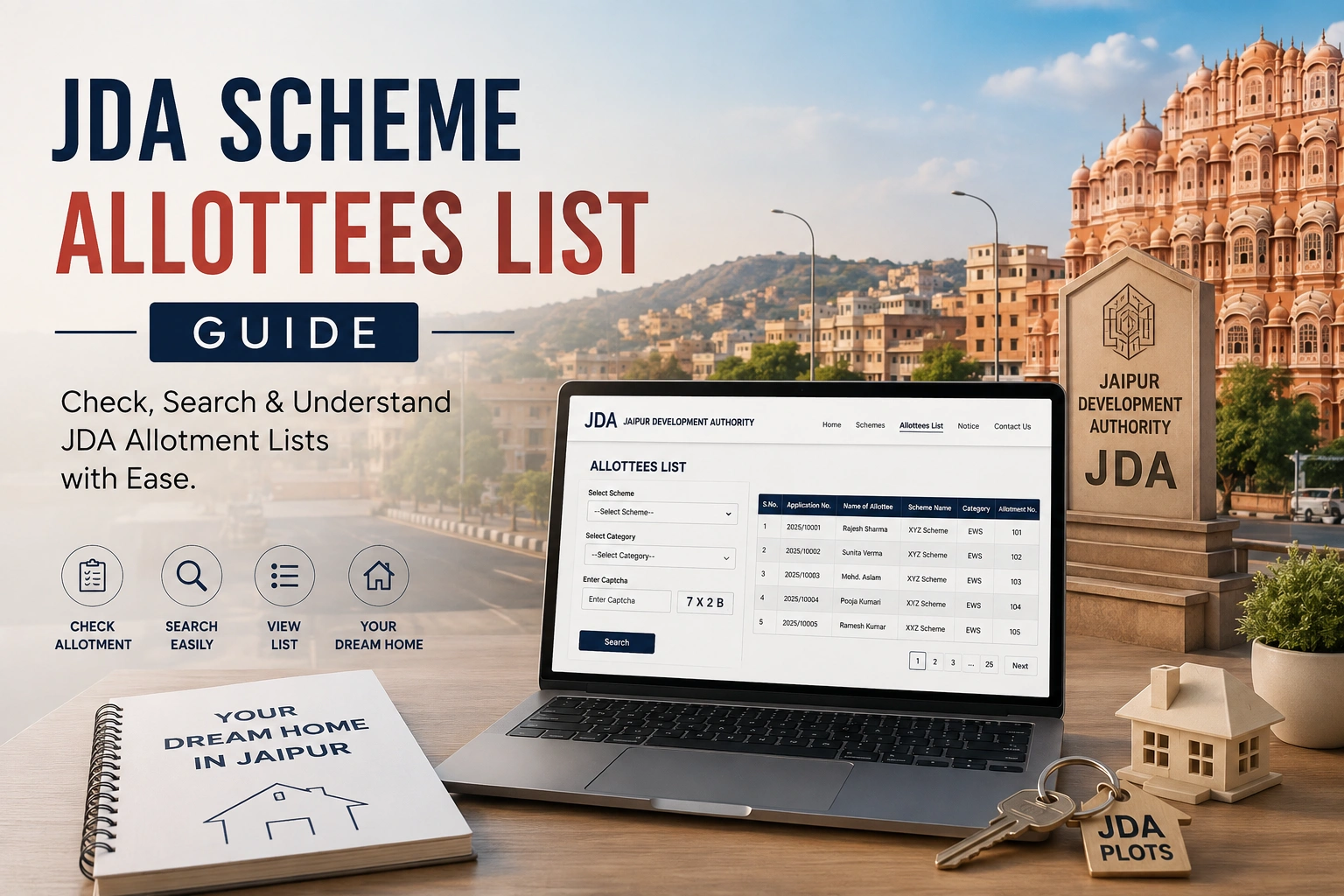
- Go to the JDA website's scheme and allottees section.
- Search or browse by scheme name to find the relevant allotment records.
- Locate the specific plot number within that scheme's records.
- Confirm the recorded allottee name matches what you've been told — or trace the transfer history if it's changed hands since original allotment.
Reading an Allottees List Correctly
| What You Find | What It Means |
|---|---|
| Original allottee name matches the current seller | Clean, direct chain — straightforward ✅ |
| Original allottee differs from current seller | Normal if the plot has changed hands — but you need to see the transfer documentation bridging the two |
| Plot not found in the scheme's records at all | Serious concern — clarify directly before proceeding ✅ |
| Multiple names or disputed allotment notation | Requires full investigation before any transaction |
What If Your Name — or the Seller's — Isn't on It
If you're checking a plot you already own and don't find your name, or expected updates from a transfer aren't reflected, this typically means a formal mutation/update process hasn't been completed with JDA even if a private sale genuinely occurred. This is worth resolving directly with JDA rather than assuming it's a data error, since an incomplete official record can complicate future transactions.
Scheme-Specific Lists vs General Search
Because JDA's records are organized by scheme, searching generally without knowing the specific scheme name is far less effective than going directly to that scheme's own allottee list. This is why getting the exact scheme name from your seller upfront — before you even start the verification process — saves significant time.
Named JDA Schemes Worth Knowing
Jaipur has numerous JDA-developed schemes across the city, including Nilay Kunj in Jagatpura, Rohini Enclave, Anand Vihar, Dev Vihar, Abhinav Vihar and Abhinav Vihar Vistar, Anupam Vihar, Atal Vihar, and Yash Vihar, among many others. If your property falls within one of these or a similar named scheme, that specific scheme name is your entry point into the correct allottee records.
Allottee Records for Very Old Schemes
Some JDA schemes date back many years, and digital record-keeping quality can vary for older allotments compared to more recently developed schemes. If an online search for an older scheme returns incomplete or unclear results, this doesn't necessarily indicate a problem with the plot itself — it may simply reflect the limits of digitization for older records. A direct inquiry at JDA offices can supplement what's available online in these cases, and is worth the extra step rather than assuming incomplete online records mean something is wrong.
Verifying Multiple Transfers Since Original Allotment
It's common for a plot to have changed hands more than once since its original JDA allotment. Each transfer in that chain should ideally have proper documentation — not just the most recent sale. When checking a scheme's allottee records, treat the original name as your starting point, then work forward through however many documented transfers have occurred to reach the current seller, rather than only checking the two most recent parties.
Allottee Verification Alongside Other Checks
Checking allottee records shouldn't happen in isolation — pair it with patta status verification (see our complete patta guide) for a fuller picture of a plot's legal standing. Together, these two checks cover both the original JDA allotment history and the current recognized ownership status, giving you a genuinely thorough view before committing to any JDA-scheme property.
Frequently Asked Questions
Is checking a JDA allottees list free?
Yes, generally free and accessible through JDA's own website or land records portal.
What if I don't know which JDA scheme my property belongs to?
Ask the seller or builder directly — this information should be readily available for any legitimate JDA-scheme property.
Does a name mismatch always mean something is wrong?
Not necessarily — plots legitimately change hands over time. What matters is whether proper transfer documentation exists bridging the original allottee and the current seller.
How is this different from checking patta status?
Allottee records establish the original JDA allotment; patta reflects the current recognized ownership status. See our complete patta guide for that related check.
Can I verify a scheme allottee list before making an offer on a property?
Yes, and this is exactly the right time to do it — before you're financially or emotionally committed to a specific property.
What if the scheme name I was given doesn't return any results?
Double-check for spelling or naming variations first, then treat a genuine no-match as a serious red flag worth clarifying directly with the seller before proceeding.
Are all JDA schemes equally well-documented online?
Documentation completeness can vary — for older or smaller schemes, you may need to supplement online searches with a direct inquiry at JDA offices for complete records.
Does Jaipur Space verify scheme and allottee records for listed properties?
For JDA-scheme properties specifically, this forms part of our broader verification process. Talk to our team for details on any property you're considering.
What's the relationship between allottee records and RERA registration?
They're separate systems — allottee records reflect JDA's own land allotment history, while RERA registration confirms a development project's legal compliance status. See our RAJ RERA guide for that process.
Can I get help interpreting a confusing allottee record?
Talk to our team, or consult a property lawyer familiar with JDA records for anything beyond a straightforward result.
Is there a way to get official certified copies of allottee records?
For formal purposes beyond basic verification, JDA offices can typically provide certified copies of relevant records — worth pursuing directly if you need documentation beyond what an online search alone provides.
Should I be concerned if a scheme has had past allotment disputes?
Not automatically disqualifying, but worth researching the specific history — some disputes get fully resolved and don't affect current, properly-transferred plots, while others may have lingering complications worth understanding before you buy into that particular scheme.
How long are JDA allottee records typically retained?
Records generally persist as part of JDA's permanent land administration archive, though ease of online access can vary by scheme age as noted earlier in this guide.
Verify Your Scheme's Records
Talk to our team about any JDA-scheme property you're considering — we'll help you trace the allotment history properly before you commit, so the plot you're buying has a clean, documented chain all the way back to its original allotment.